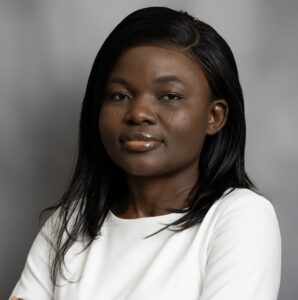
Author Bio
Adebukola Dada, PhD, is a soil and climate scientist whose work focuses on helping farmers make informed management decisions that improve soil health, maintain yields, and reduce environmental risk. Her research examines how cover crop selection, nutrient management, and field variability influence crop performance, nutrient availability, soil carbon, and greenhouse gas emissions in working agricultural systems. She has led multi-site field studies evaluating cover crop planting strategies, nitrogen and phosphorus management, and differences in soils and yield potential across fields variability, including research on cereal rye and Balansa clover systems.
Dr. Dada has extensive experience working directly with farmers and conservation professionals to translate research into practical, field-ready guidance. She currently serves as a postdoctoral research fellow at Purdue University and previously worked with the Soil Health Institute, where she helped develop soil health management indices used by farmers nationwide. Her work emphasizes practical, profitability-focused strategies for managing cover crops while building resilient, productive soils.
Presentation: Beyond Cereal Rye: Exploring Winter-Hardy Legumes potential for Resilient Soils: Cover crops can improve soil health and long-term resilience, but making decision on the right species and getting them planted on time—without risking yield—remains a challenge for many farmers. This talk shares lessons from five years of NC-SARE-funded field trials comparing winter-hardy legumes, especially Balansa clover, with cereal rye across different planting dates, seeding methods, and reduced nitrogen rates. We will focus on what planting timing and management mean for spring biomass, nitrogen supply, corn yield, and soil health. Farmers and advisors will leave with practical, research-based insights to help decide when legumes make sense, when rye fits better, and how to manage cover crops to work within tight planting windows.