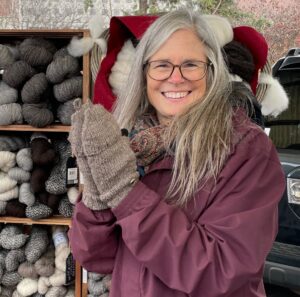
Author Bio
Whitney Schlegel with her husband Kip Schlegel owns and manages Marble Hill Farm, a small diversified livestock farm in Monroe County. They work to encourage a connection with the land by sharing our farm with community and supporting on-farm educational programs. A whole-farm ecosystem approach guides our land stewardship. The Lowline Angus beef cattle, Shetland sheep and laying hens are managed in a regenerative grazing system for grass-finished beef, wool, and pasture-raised eggs. These products are sold at local markets. Their flock of Shetland sheep provides a magnificent array of natural colored wool, which is processed into yarns, roving and wool products for retail sale. Waste wool from shearing is used and purchased for making sheep wool pellets and shreds offered as a soil amendment (9-0-2) and mulch, “Sheep to Soil”.
Presentation: Exploring Wool Pellet and Mulch Applications in Specialty Crop Production: Integrating sheep wool into specialty crop systems offers an opportunity to create value-added markets for low-grade wool while providing producers with a renewable soil amendment that has demonstrated agronomic benefits. However, best management practices for applying waste wool across diverse specialty crops and production environments are not yet well defined. This presentation will provide current research findings on the use of wool pellets and wool mulch in vegetable and cut-flower production systems. Topics will include soil health, crop performance, and practical considerations for on-farm adoption. This work is supported by a NC-SARE Farmer Rancher grant (FNC24-2434) and Purdue Extension.